
Blog
SIEM vs SOAR: Which One Does Your Abu Dhabi Business Need?

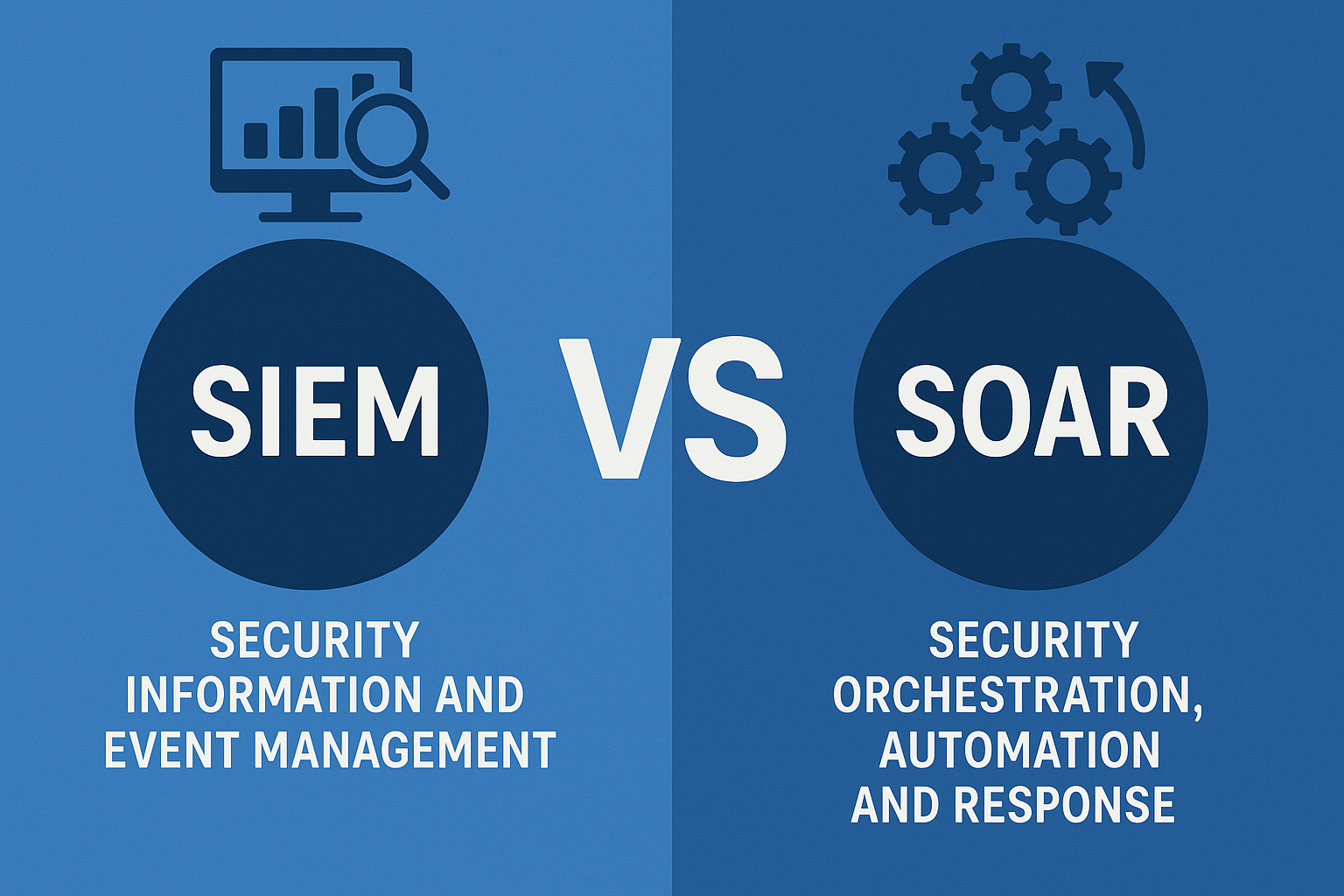
Businesses in Abu Dhabi need to make well-informed choices regarding their cybersecurity investments in light of the quickly changing threat landscape of today. Security Orchestration, Automation, and Response (SOAR) and Security Information and Event Management (SIEM) are two cutting-edge technologies that are frequently cited as crucial elements of a contemporary security stack.
However, how do you choose between them? This thorough guide will assist you in comprehending what an SIEM solution is, examining the distinctions between SIEM and SOAR, and deciding which choice best meets the requirements of your company.
We’ll go over how working with a reputable SIEM Solution in Abu Dhabi provider, such as Bluechip Cyber Defense, can improve your security monitoring approach.
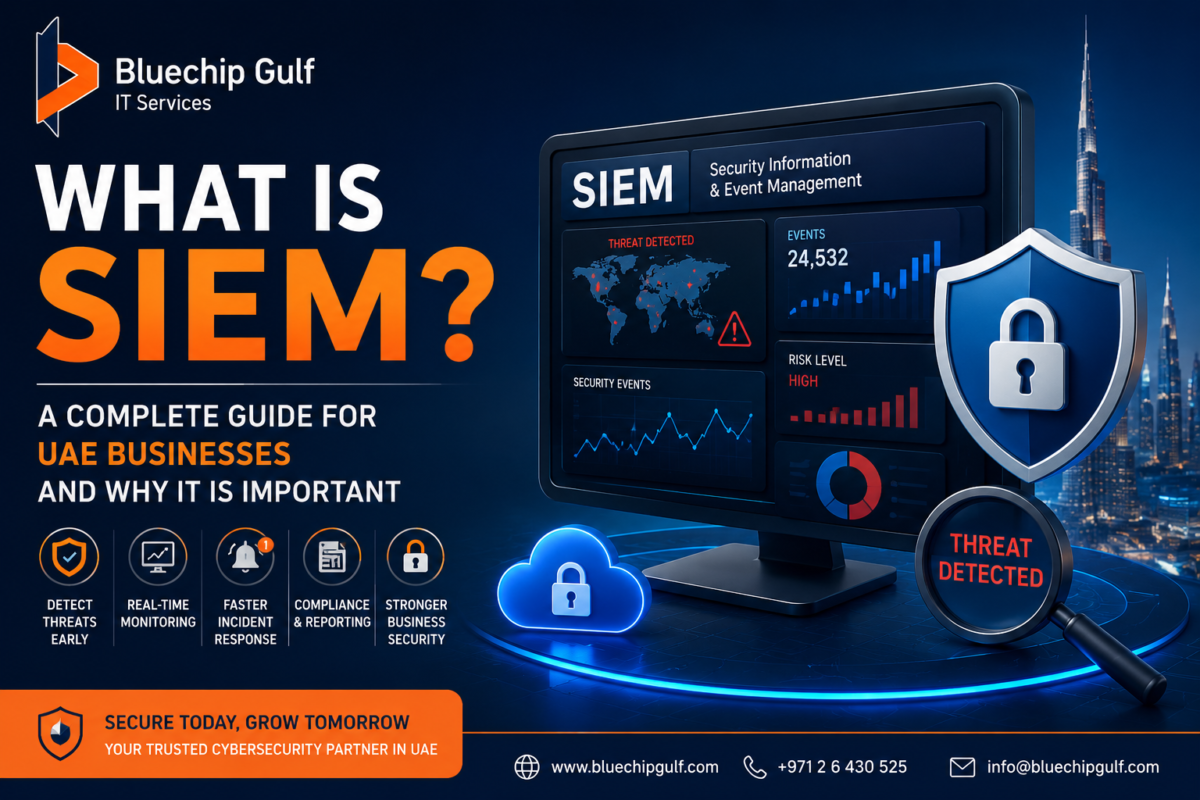
Understanding the Basics – What Is a SIEM Solution?
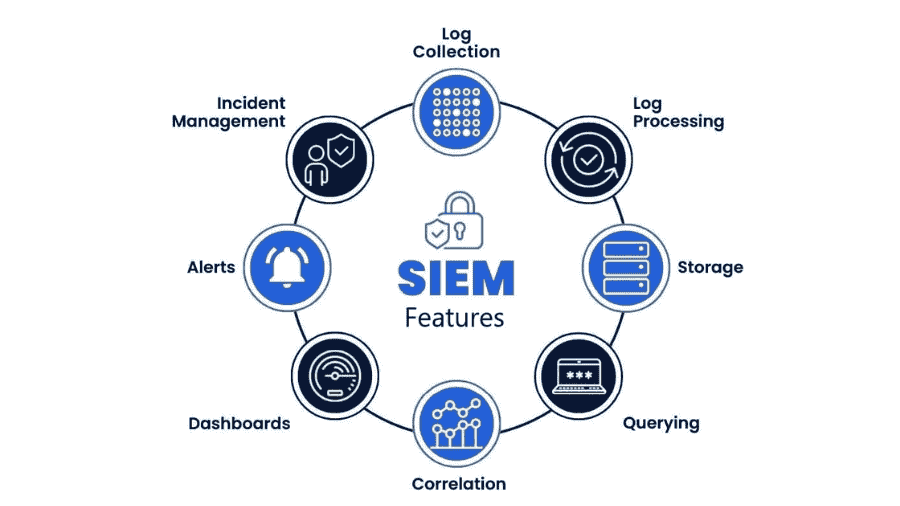
In order to give you real-time visibility into security events, an SIEM solution essentially collects and examines log data from all areas of your network, including servers, firewalls, endpoints, apps, and more. Among the essential skills are –
- Log Collection & Normalization – Log collection and normalization create a single schema by combining various data formats.
- Real-Time Correlation – Connects related occurrences (like repeatedly unsuccessful login attempts) to spot possible dangers.
- Alerting & Reporting – Creates compliance reports and generates alerts for irregularities or policy infractions.
Businesses frequently wonder what is a SIEM solution and why it’s so important. SIEM serves as your security “nerve center,” providing analysts with the background information and insights they need to identify complex attacks before they become more serious.
What Is SOAR and How Is It Different?
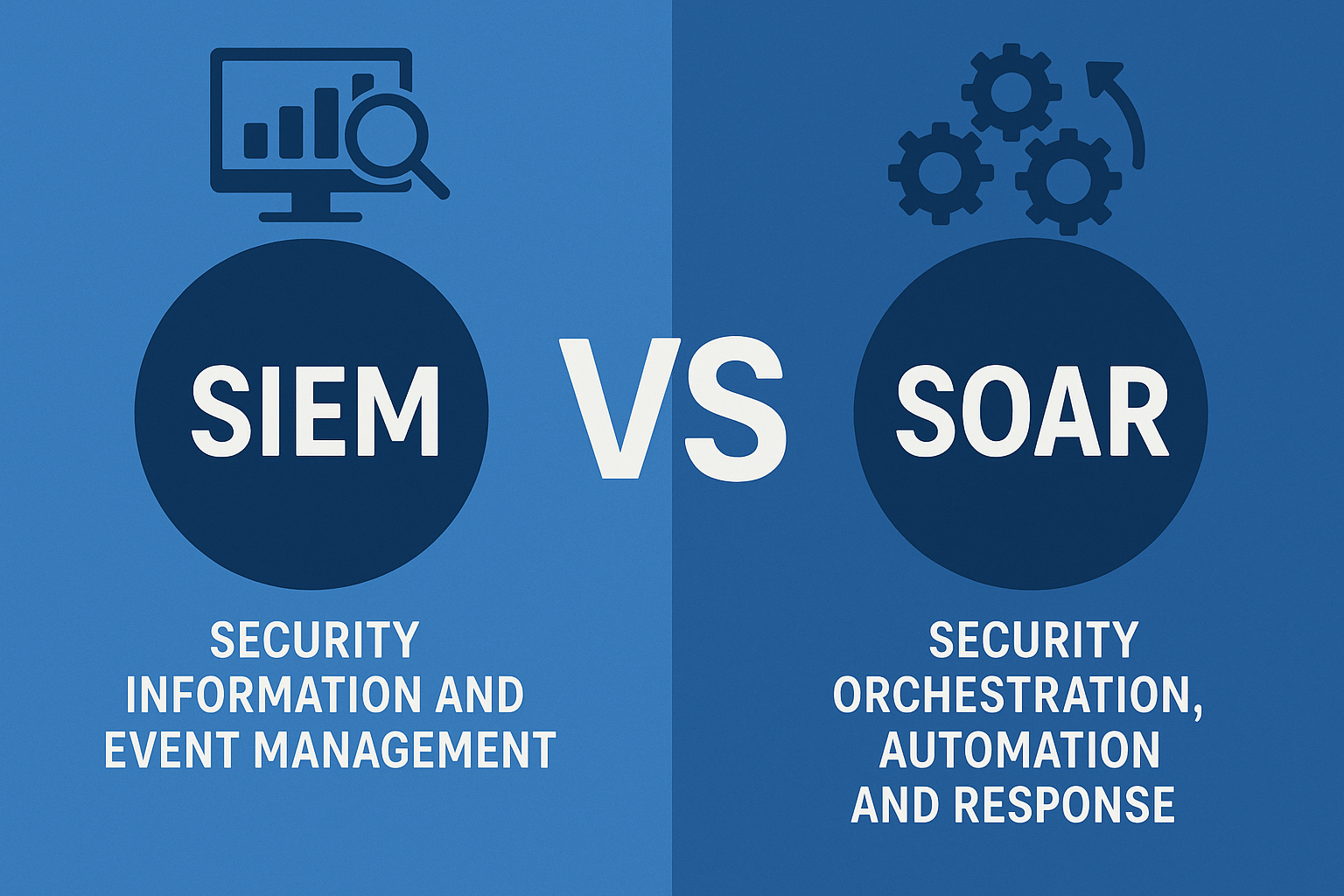
SOAR platforms prioritize automation and response, whereas SIEM concentrates on detection and visibility. A standard SOAR solution provides –
- Playbook Automation – Playbook automation refers to preset procedures that automatically look into and fix problems (such as quarantining an infected endpoint).
- Case management – Tracking incident lifecycles from detection to resolution using centralized dashboards.
- Integration of Threat Intelligence – Combines feeds from various sources to add context (such as IP reputation) to alerts.
- Collaboration Tools – Security teams can assign tasks, record findings, and keep audit trails with the help of collaboration tools.
The main goals of SOAR are to standardize best practices throughout your security operations center (SOC), decrease manual labor, and speed up incident response times.
Why Your Abu Dhabi Business Needs Both
The most robust security posture is provided by a combined SIEM-SOAR ecosystem for many organizations –
- Increased Visibility – An SIEM in Abu Dhabi gives you a comprehensive picture of your surroundings, which is essential for proactive threat hunting and adherence to regional laws.
- Quicker Reaction – Response times are reduced by SOAR-driven automation, which converts hours of manual research into automated workflows in a matter of minutes.
- Increased Efficiency – Your security team can concentrate on strategic projects instead of responding to firefighting alerts by cutting down on repetitive tasks.
- Scalability – SIEM Services in Abu Dhabi and SOAR platforms grow to accommodate higher data volumes and complexity as your company expands, whether through the addition of new apps, cloud services, or remote workers.
Key Considerations for Implementation
Take into account the following elements when assessing a SOAR platform or SIEM solution in Abu Dhabi –
- Use Case Prioritization – Start with a strong SIEM solution if regulatory compliance, log centralization, and fundamental threat detection are your main objectives. Invest in SOAR if you need to expedite incident response but already have sophisticated detection capabilities.
- Integration Ecosystem – Verify that it works with the security tools you currently have (firewalls, cloud platforms, identity management, and endpoint protection). Verify whether the vendor provides ready-made connectors for quick deployment.
- Local Knowledge and Assistance – Join forces with an SIEM Solution Provider in UAE that is knowledgeable about Middle Eastern threat vectors and regional compliance frameworks, such as the ADGM Data Protection Regulations. Seek out localized service-level agreements (SLAs) and round-the-clock assistance.
- Total Cost of Ownership – Include licensing, infrastructure, execution services, and continuing maintenance in the total cost of ownership. Assess value delivered in terms of operational efficiencies, quicker response times, and lower risk.
Security Monitoring UAE – The Role of SIEM Abu Dhabi
Constant data collection and analysis are essential for effective security monitoring in the UAE. A local SIEM Abu Dhabi deployment provides –
- Low-Latency Log Collection – By placing log collectors inside UAE data centers, you can reduce delays.
- Regulatory Alignment – Make use of pre-made templates for Abu Dhabi Digital Authority regulations or DMCC Freezone specifications.
- Localization – Accurate timestamping and contextual insights are ensured by support for Arabic language logs and regional time zones.
The performance of your SOC is further improved by selecting a local SIEM partner, which also allays worries about latency and cross-border data transfers.
Why Bluechip Cyber Defense Stands Out?
Bluechip Cyber Defense, one of the top SIEM services in Abu Dhabi, offers comprehensive solutions to meet the requirements of UAE businesses –
- Personalized SIEM Architecture – Ranging from correlation rules tailored for local threats to log sources and retention policies.
- Option for Managed Services – Take advantage of automated playbooks that initiate SOAR workflows and round-the-clock SOC monitoring by certified analysts.
- Integration of Threat Intelligence – Get access to global and regional feeds that add useful context to your alerts.
- Reporting on Compliance – Reports that are automatically generated for PCI DSS, ISO 27001, and local regulatory requirements make audit preparation easier.
- Expert Services – Frequent tuning sessions, SOC training, and health checks guarantee that your SIEM in Abu Dhabi stays up to date with new threats.
Employing Bluechip cyber defense gives businesses access to state-of-the-art technology and extensive local knowledge, guaranteeing a highly successful SIEM solution in Abu Dhabi.
When to Choose SIEM Alone
A stand-alone SIEM solution may be immediately beneficial for smaller businesses or those just starting out in security –
- Regulatory First – SIEM offers the logs, dashboards, and reports that auditors require if compliance is your primary concern.
- Budgetary Restrictions – Investing initially in SIEM alone is frequently less expensive than deploying SIEM and SOAR together.
- Staffing Limitations – Starting with SIEM enables gradual maturity; without a mature SOC, SOAR playbooks may sit idle.
Layering in SOAR becomes a logical next step as your security team develops expertise and alert volumes increase over time.
When to Embrace SOAR Integration
Companies that currently have –
- Established Detection – Skilled SIEM application with fine-tuned rules and few false positives.
- High Alert Volume – Manual responders are overloaded with thousands of alerts every day.
- Unambiguous Response Playbooks – Established protocols for frequent occurrences (e.g., malware outbreaks, phishing).
By automating response steps, these companies will see a significant return on investment, allowing analysts to concentrate on strategic threat hunting and threat intelligence analysis.
A Roadmap to Deployment
- Phase of Assessment – Define use cases, map out current tools, and perform a security maturity assessment. As baselines, calculate the current mean time to detect (MTTD) and mean time to respond (MTTR).
- Pilot Implementation – Test core detection capabilities and deploy SIEM in a restricted setting (such as critical servers). Make pilot playbooks for high-frequency incidents if you plan to implement SOAR.
- Full-Scale Rollout – Include SOAR playbooks in the SOC workflow and extend SIEM coverage to all log sources. Analysts should receive training on both platforms.
- Continuous Improvement – Review metrics (MTTD, MTTR) on a regular basis and make necessary adjustments to playbooks or correlation rules. Take into account newly discovered use cases and threat intelligence.
Working with an experienced SIEM solution provider in UAE guarantees that every stage is completed without causing too much interference with your business’s operations.
Conclusion
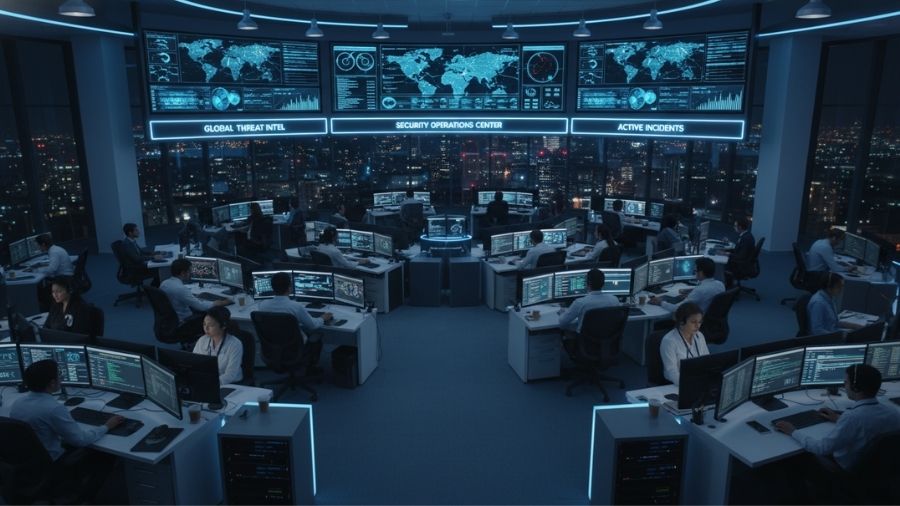
The maturity, risk profile, and operational objectives of your Abu Dhabi company will determine whether you should use SIEM or SOAR, or how to combine the two. While SOAR improves your response capabilities through automation, an SIEM solution offers fundamental SIEM security and security monitoring in the United Arab Emirates.
Working with a reputable company like Bluechip Gulf will provide you with specialized knowledge, local knowledge, and a scalable plan to protect against both present-day threats and unknowns in the future.
To keep your company safe and strong in 2025 and beyond, assess your needs, make a strategic plan, and start your cybersecurity journey.