

In the early 1980s, the foundational model of the modern structured cabling system was introduced, the Premises Distribution System (PDS). It was a revolutionary shift that shaped today’s building cabling infrastructure. In the fast-paced world of technology and communication, the point of not having a structured cabling system is off the table. As it has been used in corporate buildings, healthcare facilities, and data centers, it has been a major part of data transfer for decades.
For businesses looking for a professional structured cabling provider in the dynamic city of Dubai, Bluechip Abu Dhabi comes across as one of the leading providers. Our team makes sure that your business operates efficiently without experiencing messy cables for your IT operations. Through this comprehensive blog, let’s explore in detail how structured cabling plays a key role for organizations in the UAE.
What is a Structured Cabling System
A structured cabling system refers to a standardized way of installing telecommunication infrastructure, which includes cabling, hardware, and connectors for data, voice, and video signals. This system was created to avoid the nightmare of an unstructured mess of wires that leads to safety hazards, poor airflow, overheating, and reduced performance.
This problem of messy wires substantially increases downtime, hinders data transfer, and increases long-term and costly management. Imagine taking out a hundred balls of tangled light wires on a festive day. Yes! It is that problematic.
To overcome this challenge, there are 6 components of the structured cabling system that were introduced in 1991. Their main goal was to provide guidelines through the ANSI/TIA-568 standard, so commercial buildings can navigate a structured cabling infrastructure for their communication purposes.
The 6 Main Components of Structured Cabling
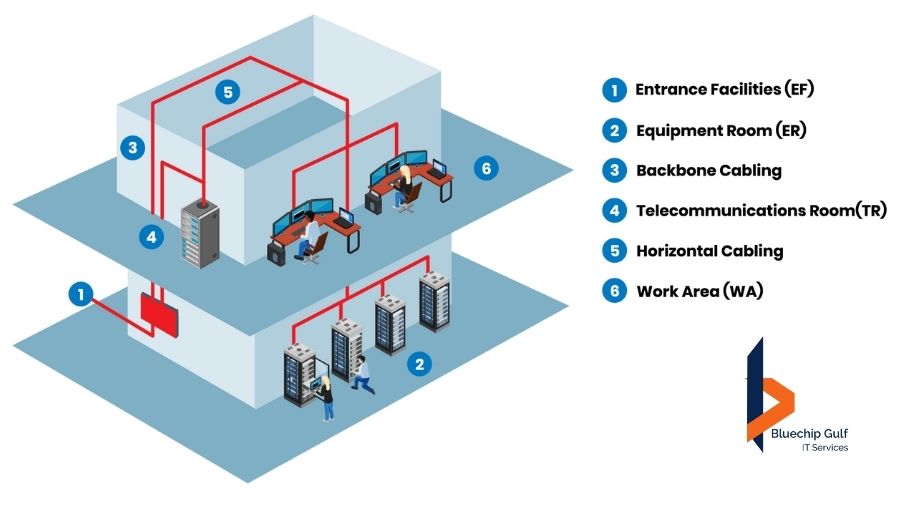
Here are 6 main components of a structured cabling system:
Entrance Facilities (EF)
Entrance Facilities (EF) are the first critical space from where the cables from the outside network enter the building area. Networking cables from internet service providers enter this area and are connected to systems like patch panels that connect these wires to the internal network infrastructure.
This connection hub is highly protected by grounding and shielding to protect internal wires from weather conditions like lightning and thunder, and random power fluctuations.
Equipment Room
An equipment room (ER) is a dedicated technical room where you can handle the building’s facilities, such as electricity, light, and even water supply. Basically, it is the brain of the building from which every technical facility can be controlled. It consists of two main branches:
- Telecommunications and IT Equipment Room
The Telecommunications and IT Equipment Room is a dedicated room where the building’s networking and phone connections connect. These rooms are highly protected and restricted from entering as they consist of all the data, specialised cooling systems, and a 27/7 uninterrupted power supply.
- Mechanical or Technical Equipment Room
This room consists of the building’s non-IT functions. It is also a protected area, but open to IT workers and maintenance staff for monitoring or handling inconvenience. The room includes:
- Boiling systems
- Heating, Ventilation, and Air Conditioning (HVAC)
- Electrical panels
- Power distribution units
- Water pumps and related machinery
Backbone Cabling
The backbone cabling is also known as the vertical or riser cabling. As they are connected from floor to floor, they are called the backbone of structured cabling systems. Their main goal of these fiber optic cables is to connect central equipment, network service, and telecommunications systems.
Telecommunications Room (TR)
The Telecommunications Room is a dedicated closet of main networks, cables, equipment, cable terminations, and cross-connects, which is responsible for data, wi-fi, security, and phone network from all over the building.
The room consists of several hardware items such as a cabling system, switches, and routers handled by specialised technicians who help with every troubleshooting issue. They are also protected and equipped with cooling systems to regulate temperature, resulting in efficiency.
Horizontal Cabling
A horizontal cabling system is a network of cables that connects the main network equipment room to individual networking systems. In other words, they are networking outlets that allow you to connect or plug your devices, such as data cables, computers, charging phones and laptops, and related activities.
Work Area (WA)
A Work Area or workspace is an organized space where you perform your duties or usual tasks. It includes your desk, chair, computer, or a program inside it, like a notepad.
Why is the Structured Cabling System Important?
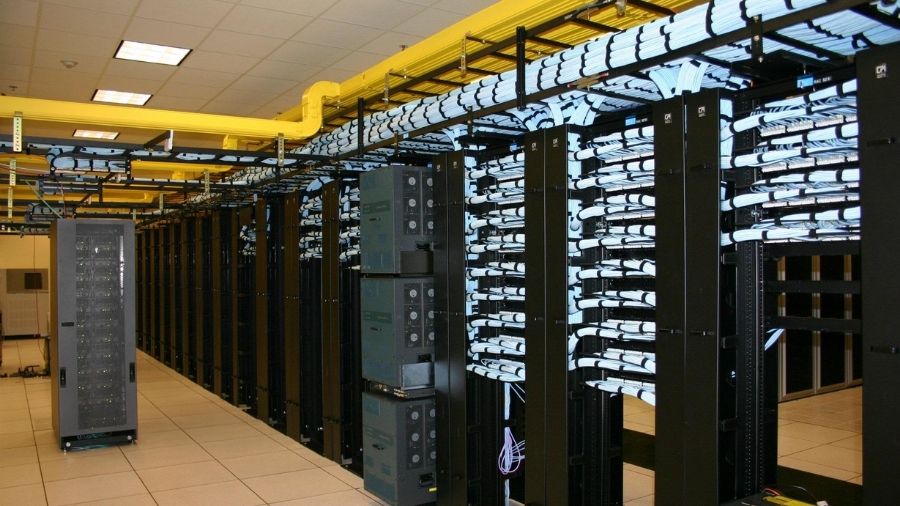
A structured cable system is essential because of these factors:
- A structured cable system provides a high-bandwidth network with no interference in data transfer and with low chances of errors.
- The simplified structure makes it easy to track network issues, saving time and money on troubleshooting.
- The structured cabling system is designed to withstand current and future technologies, providing high-speed connections.
- These systems remain cost-effective solutions as they offer lower maintenance charges by reducing downtime.
- These structured cabling systems suit every need of the building. From phones to computers and air conditioning systems, they maintain full functionality for several pieces of equipment.
Conclusion
A structured cabling system is an essential part of any commercial building. From healthcare, manufacturing, industrial, to IT and Telecommunications, every industry needs a structured system of wiring ensuring high-quality data transfer, video transmission, and maintaining high performance. Here, we discussed the 6 components with the importance of structured wiring.
We, at Bluechip Abu Dhabi, offer high-end IT solutions and structured cabling services tailored to the needs of our clients worldwide. Our extensive experience in utilizing advanced structured cabling systems in our services enables us to achieve seamless performance and satisfactory results. From system security and management to security vulnerability and assessments, we have got your back through remote and on-site support for both IT and structured cabling support. Thus, you can rely on us and acquire our professional services.


