

In the modern business world, speed, adaptability, and real-time data are no longer only benefits; they are demands for survival. Companies today, particularly in fast-growing, reasonable markets like the United Arab Emirates, need tools that can keep up with the pace of innovation. This is where the cloud ERP system comes in, thoroughly changing the way companies handle their functions.
For years, Enterprise Resource Planning (ERP) software has been the spine of business, incorporating main operations, such as finance, HR, inventory, and sales. Conventionally, these systems were installed on-premise, meaning they lived on your company’s own servers, needing big upfront expenses, complicated maintenance, and an in-house IT team.
Today, the power of cloud computing has transformed everything. The cloud-based ERP system gives all the main advantages of ERP, but with unprecedented adaptability, lower expenses, and constant innovation. Let’s understand why the cloud ERP system is the undeniable future of business administration and how corporations such as Bluechip Abu Dhabi are assisting companies in the region to make this vital transition.
What is a Cloud ERP System?
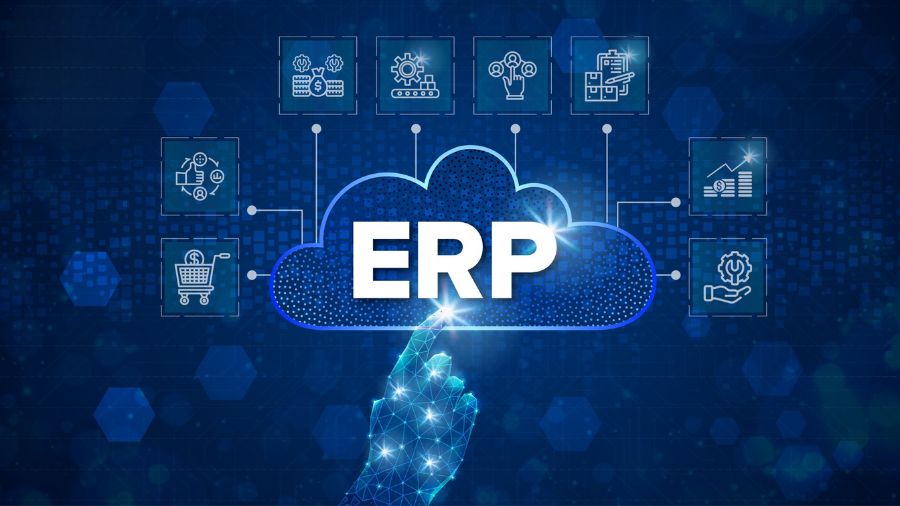
Imagine the company is a body. Every department, sales, finance, HR, and warehouse, is a separate organ. They all need to work together, but in a conventional formation, they usually utilize various tools and speak various languages. This results in slow decisions, mistakes, and wasted time.
An ERP system is the central nervous system. It links all these departments and centralizes all their data into a single, unified database. This incorporation permits data to flow smoothly and immediately, providing everybody a single, precise view of the business.
The Top 5 Game-Changing Benefits of Cloud ERP Software
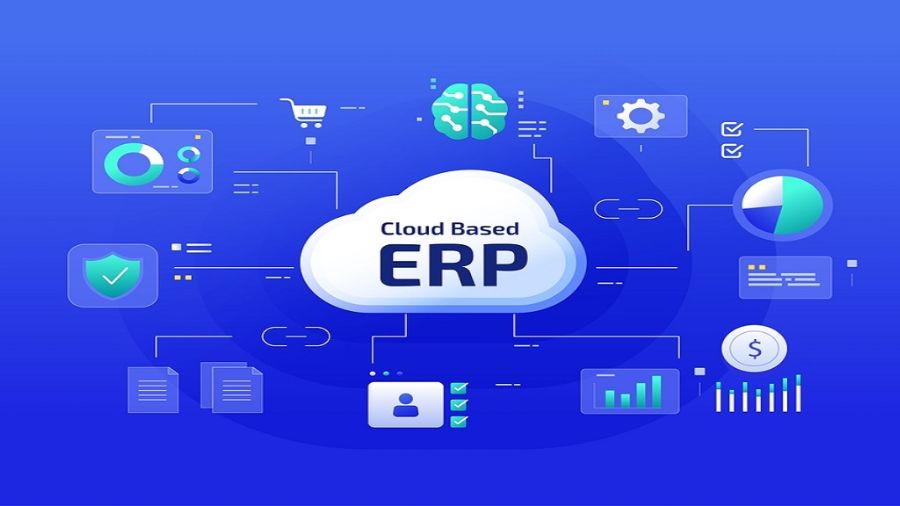
The benefits of moving to an advanced cloud ERP system are far-reaching, touching every part of your corporation, from the balance sheet to the employee experience.
- Significant Cost Reduction and Predictable Spending
The first primary benefit is financial. With a cloud ERP system, you remove the huge Capital Expenditure of buying and installing servers, databases, and licenses.
No Hardware Costs – You do not have to purchase, house, or power costly servers.
Decreased IT Overhead – The vendor handles all maintenance, updates, and disaster recovery, freeing your internal IT group to pay attention to strategic tasks.
Subscription Model – You pay a predictable, manageable monthly or yearly cost, transforming a big capital investment into a manageable operating expense.
2. Unmatched Scalability and Flexibility
For a vibrant market such as the United Arab Emirates, where companies usually experience quick evolution, scalability is everything.
Grow on Demand – If your business doubles its client base, a cloud ERP system can immediately add more users, process more transactions, and manage more data without you having to purchase a single piece of hardware.
International Access – Your groups in Abu Dhabi, Dubai, or anywhere in the world can access the same precise real-time data, enabling smooth collaboration and supporting international expansion easily.
3. Real-Time Data and Smarter Decision-Making
This is the power of a unified cloud-based ERP system. Because all data, from sales orders to cash flow to inventory levels, is updated immediately and centralized, leaders achieve real-time visibility into the business.
Real-Time Dashboards – Managers can check the pulse of the corporation on a mobile device, watching live financial reports, sales trends, and inventory requirements.
Predictive Analytics – Advanced systems utilize AI and Machine Learning to research this real-time data, assisting you in predicting future trends, forecasting demand more precisely, and making forceful and reactive decisions.
4. Automatic Updates, Always Current
With conventional ERP, upgrades were a prime, expensive project every few years, usually leading to downtime. With cloud ERP software, this is all managed automatically by the provider.
Always on the current version – You always have the newest features, highest protection norms, and best performance without lifting a finger.
Immediate Security Patches – Protection updates are applied instantly, keeping you secure from the current threats without the hazard of forgetting to manually patch your system.
5. Superior Security and Disaster Recovery
For several companies, data security is a major concern. Reputable cloud ERP system vendors invest far more in enterprise-level protection than any single company could.
Professional Security – You benefit from 24/7 monitoring, modern firewalls, and data encryption handled by protection advantages.
Built-in Disaster Recovery – Your data is backed up routinely and stored in several geographically dispersed data centers. If a disaster occurs, your business can be up and operating again rapidly with minimal data loss, a real advantage to enterprise resource planning continuity.
The Essential Modules – A Look Inside the Cloud-Based ERP System

An advanced cloud ERP system is a set of incorporated modules that cover all business operations. The smooth flow of data between these modules is what delivers its core value.
1. Financial Management
This module is the core. It manages the general ledger, accounts payable, accounts receivable, and fixed assets. It automates financial closing, manages budgeting, and makes sure adherence to local standards. For companies running in Abu Dhabi, UAE, having a system that effortlessly handles VAT and other local fiscal demands is vital.
2. Supply Chain and Inventory Management
From the moment you order raw materials to the moment a final item is delivered to the client, this module tracks everything.
Inventory Control – Controls expensive overstocking and stock-outs.
Order Processing – Automates order fulfillment, from the sales team entering the order to the warehouse team packing it.
3. Human Resources Management
This centralizes all employee information, handles payroll, tracks attendance and leave, and streamlines the complicated procedure of talent management. A better cloud ERP system should present features customized to the remarkable labor laws of the United Arab Emirates.
4. Sales and Customer Relationship Management
Usually incorporated directly, the CRM part of the cloud ERP software tracks every client interaction, from the first marketing email to the final sale and post-sale support. This makes sure your sales, marketing, and supporting teams are constantly on the same page.
5. Manufacturing/Production Management
This module schemes and controls the manufacturing procedure, handling the Bill of Materials, scheduling production runs, and making sure quality control.
The Local Context – Enterprise Resource Planning in Abu Dhabi and the UAE
The UAE, driven by visions such as the Abu Dhabi Economic Vision 2030, is quickly digitalizing its economy. For companies in this region, adjusting a cloud ERP system is not a luxury; it is a competitive need.
- Meeting Regional Compliance and Tax
UAE companies should comply with particular local financial, HR, and regulatory norms. A locally seasoned partner makes sure your cloud-based ERP system is configured appropriately to handle things like –
VAT Reporting – Precise and adherent calculation and reporting of Value Added Tax.
Labor Law – Right calculation of salaries, end-of-service advantages, and adherence to the UAE labor law.
2. Leveraging Local Expertise with Bluechip Abu Dhabi
When seeking a partner to execute your cloud ERP system, local experience matters most. Businesses, such as Bluechip Abu Dhabi, have expertise in comprehending the different functional and regulatory landscape of the Emirates.
They do not only sell software; they customize and execute the solution to fit your particular industry requirements, making sure a seamless, quick transition from your old system to the advanced cloud ERP system. This local specialization means good support, quicker execution, and a strong comprehension of your business difficulties in the United Arab Emirates.
The Future is Integrated – AI, IoT, and Next-gen Cloud ERP

The growth of the cloud ERP system is far from over. The future is about making the system even smarter and more connected by weaving in next-generation technologies.
- Artificial Intelligence and Machine Learning
AI is being constructed right into cloud ERP software to manage regular tasks and make predictions.
Automated Data Entry – AI can read invoices and automatically enter the data into the system, removing human mistakes.
Predictive Maintenance – For manufacturing corporations, the ERP can utilize ML to predict when a part of machinery is likely to break down, automatically scheduling maintenance prior to a failure, which leads to expensive downtime.
2. Internet of Things Integration
Consider sensors in your warehouse sending real-time data directly to your ERP.
Real-Time Inventory – IoT sensors can automatically track the spot and quantity of stock, delivering immediate, ideal inventory precision.
Supply Chain Visibility – Goods on a delivery truck can communicate their location and condition directly to the ERP, providing clients and logistics managers with precise, real-time updates.
The cloud-based ERP system of tomorrow will not only process data; it will smartly anticipate your requirements, automate complicated workflows, and incorporate smoothly with every technical tool you utilize.
Conclusion
The decision to move to a cloud ERP system is a step toward future-proofing your business. It is the definitive move from handling technology to handling evolution.
By moving your enterprise resource planning to the cloud, you are making an investment in a platform that is affordable, quicker, and more protected, and infinitely more adaptable than its predecessor. It frees your business from the burden of maintaining outdated infrastructure and unleashes the strength of real-time data to drive intelligent decisions.
For organizations in the UAE aiming for success, choosing a local partner like Bluechip Abu Dhabi is essential for a compliant and effective cloud ERP software deployment. The future of business is digital, interconnected, and cloud-based. Don’t let outdated technology limit your growth. Transition to a cloud ERP system and unleash your full potential.


