
Blog
How SOC & SIEM Work Together to Protect Your Business

What is a SOC?
SOC stands for:
Security Operations Center
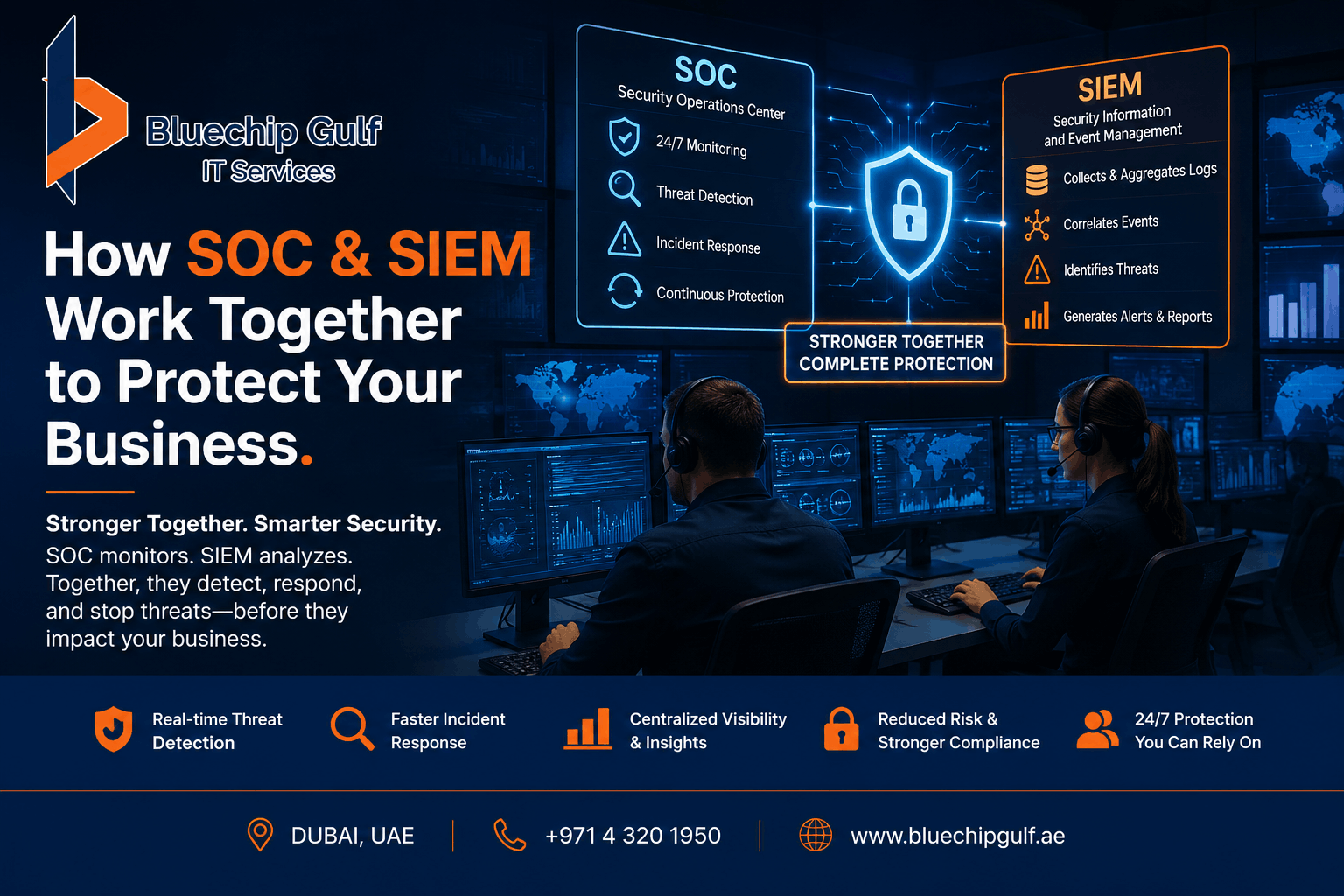
A SOC is a centralized team or facility responsible for monitoring, detecting, investigating, and responding to cybersecurity threats.
The SOC team continuously watches business systems, networks, endpoints, and cloud environments for suspicious activity.
Their responsibilities usually include:
- Threat monitoring
- Incident response
- Security analysis
- Vulnerability management
- Threat intelligence
- Security reporting
- Compliance monitoring
A SOC acts as the frontline defense team protecting business infrastructure 24/7.
What is SIEM?
SIEM stands for:
Security Information and Event Management
SIEM is the technology platform that collects and analyzes security data from across the organization.
It gathers logs and events from:
- Firewalls
- Servers
- Endpoints
- Applications
- VPN systems
- Cloud services
- Network devices
The SIEM platform automatically detects suspicious activities and generates alerts for investigation.
How SOC and SIEM Work Together
Think of SIEM as the technology engine and SOC as the expert security team operating it.
The SIEM system continuously collects and analyzes data, while the SOC team investigates and responds to detected threats.
Together, they create a complete cybersecurity monitoring ecosystem.
1. Real-Time Threat Detection
The SIEM platform constantly scans activity across the business network.
It identifies unusual behavior such as:
- Failed login attempts
- Suspicious IP addresses
- Unauthorized access
- Malware activity
- Abnormal data transfers
When threats are detected, alerts are immediately sent to the SOC team for investigation.
This level of proactive monitoring is essential for businesses using Server and Network Monitoring solutions.
2. Faster Incident Response
Without centralized monitoring, businesses may take hours or even days to identify cyber incidents.
SOC teams use SIEM alerts to quickly:
- Investigate threats
- Isolate affected systems
- Block malicious access
- Minimize operational damage
Faster response significantly reduces financial and reputational risks.
3. Better Visibility Across IT Infrastructure
Modern businesses use multiple devices, cloud platforms, and remote connections.
SOC and SIEM provide centralized visibility into:
- Servers
- Workstations
- Firewalls
- VPN connections
- Cloud applications
- Remote users
Organizations using VPN Network Monitoring can quickly detect suspicious remote access attempts or unusual user behavior.
4. Continuous Security Monitoring
Cyber threats do not only happen during office hours.
SOC teams provide 24/7 security monitoring to ensure threats are identified even during nights, weekends, or holidays.
This is especially important for industries handling sensitive customer and financial data.
5. Improved Compliance and Reporting
Many businesses in the UAE must comply with cybersecurity and data protection regulations.
SIEM platforms help generate:
- Security reports
- Audit logs
- Compliance documentation
- Incident history
SOC teams use these reports to support audits and regulatory requirements.
Common Cyber Threats SOC & SIEM Help Prevent
Businesses across Abu Dhabi use SOC and SIEM to defend against:
- Ransomware attacks
- Phishing attempts
- Insider threats
- Unauthorized access
- Malware infections
- Data breaches
- VPN attacks
- Cloud security incidents
These threats continue increasing as organizations become more digitally connected.
Which Businesses Need SOC & SIEM?
SOC and SIEM are especially valuable for:
- Financial institutions
- Government entities
- Healthcare providers
- Logistics companies
- Retail businesses
- Educational organizations
- Oil & gas companies
However, even SMEs are now adopting managed SOC services because cyberattacks increasingly target smaller businesses with weaker security controls.
Signs Your Business Needs Better Security Monitoring
You may need SOC and SIEM support if your organization experiences:
- Frequent phishing emails
- Security alerts without investigation
- Remote work security concerns
- Compliance requirements
- Increasing ransomware risks
- Limited cybersecurity visibility
- Slow incident response times
These are common indicators that existing security tools may not be enough.
Why Businesses in Abu Dhabi Are Investing in SOC Services
As cyberattacks become more advanced, businesses want:
- Proactive threat detection
- Faster response times
- Centralized monitoring
- Better compliance support
- Reduced downtime
- Stronger cybersecurity resilience
Combining SIEM technology with skilled SOC analysts provides a much stronger defense than standalone security tools alone.
Trusted providers like Bluechip Gulf help businesses implement advanced monitoring, security operations, and enterprise cybersecurity frameworks tailored for UAE organizations.
Final Thoughts
Cybersecurity is no longer just about installing antivirus software or firewalls. Modern cyber threats require continuous monitoring, intelligent analytics, and rapid response capabilities.
SOC and SIEM work together to give businesses real-time visibility into security threats while enabling faster and more effective incident management.
Organizations investing in professional IT Security Solutions today will be far better prepared to protect sensitive data, maintain business continuity, and defend against evolving cyber threats in the future.
Businesses seeking stronger cybersecurity infrastructure and monitoring solutions can explore services from Bluechip Gulf for enterprise-grade protection and managed security support.