

Blog
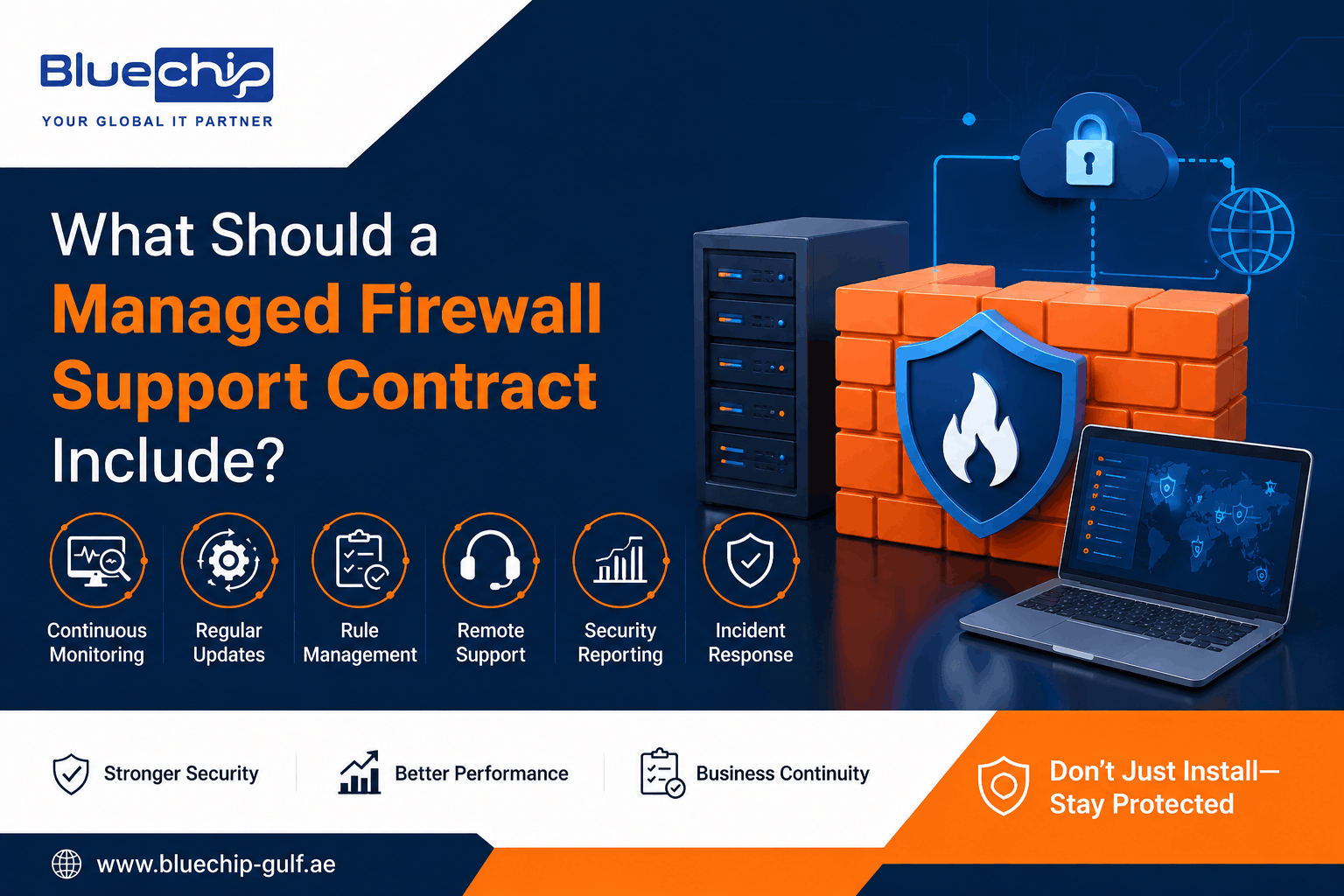
What Should a Managed Firewall Support Contract Include?

That’s a common assumption. And honestly, it’s where many businesses get a false sense of safety.
Because a firewall sitting in your network without proper support is a lot like locking your office door… and never checking who still has the keys.
The Reality: A Firewall is Not “Set and Forget”
Many companies invest in Firewall Systems but overlook what actually keeps them effective over time ongoing management and support.
Threats evolve. Users change. Business operations expand.
If your firewall isn’t continuously monitored, updated, and fine-tuned, it slowly becomes outdated and that’s when risks start creeping in.
So, What Should a Managed Firewall Support Contract Actually Include?
Let’s break it down in a practical way.
- Continuous Monitoring
It’s not enough for a system to generate alerts. Someone needs to:
- review them
- understand what’s normal vs suspicious
- take action when needed
A good contract ensures your firewall is actively monitored—not just passively running in the background.
- Regular Firmware & Security Updates
Firewalls rely on updated threat intelligence.
Your support contract should include:
- firmware upgrades
- security patch updates
- vulnerability fixes
Without this, even the best IT Security Solutions lose their effectiveness over time.
- Rule Management & Optimization
Firewall rules are not “one-time setup.”
Over time:
- employees join or leave
- applications change
- access requirements evolve
Your contract should cover:
- rule review and cleanup
- removing outdated permissions
- optimizing performance
- Remote Technical Support
Issues don’t come with prior notice.
That’s why Remote Technical Support is critical. Your contract should clearly define:
- response time (SLA)
- availability (24/7 or business hours)
- escalation process
When something goes wrong, delays can be costly.
- Security Reporting & Visibility
You should never feel blind about your own network.
A strong support contract includes:
- monthly or quarterly reports
- traffic insights
- threat attempts and blocked attacks
- usage trends
This helps you make informed decisions not guesses.
- Incident Response Support
If there’s a suspected breach or unusual activity, what happens next?
Your provider should:
- investigate the issue
- isolate threats
- guide recovery actions
Without this, you’re left figuring things out during critical moments.
- Periodic Security Review
Your firewall setup should evolve with your business.
Regular reviews help ensure:
- your configuration is still relevant
- new risks are addressed
- compliance requirements are met
This ties directly into a broader IT Security Solutions approach rather than treating firewall as a standalone tool.
Where Bluechip Abu Dhabi Adds Real Value
A support contract is only as good as the team behind it.
Bluechip Abu Dhabi goes beyond basic maintenance. Their approach is more practical and business-focused.
They don’t just “manage firewalls”they help you:
- align your Firewall Systems with real business risks
- provide reliable Remote Technical Support when it matters
- continuously strengthen your IT Security Solutions framework
Their team works as an extension of your IT environment keeping your firewall relevant, optimized, and ready for evolving threats.
Final Thought
Don’t Just Install—Stay Protected
If your current firewall support feels reactive, limited, or unclear it’s time to rethink it.
Connect with Bluechip Abu Dhabi to build a managed firewall support plan that actually works in real-world conditions.
Because security isn’t a one-time setup it’s an ongoing commitment.